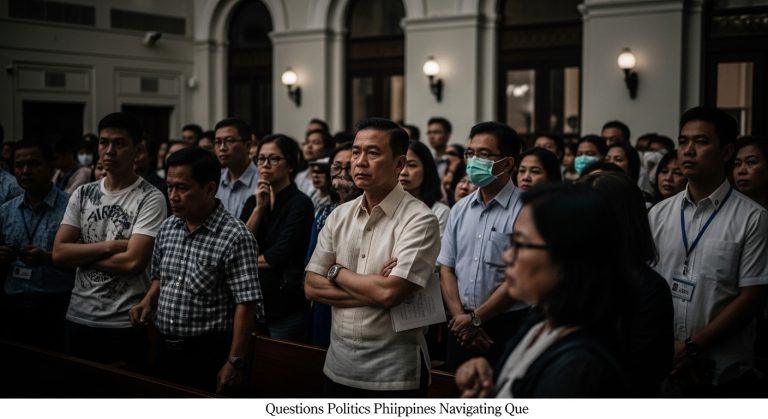

In the Philippine political arena, the phrase trump Politics Philippines surfaces as more than a catchy meme; it denotes a framework for understanding how American political branding, diplomacy, and policy shifts shape local decision-making. This analysis explores how global narratives tied to a controversial outgoing administration align with Philippine institutions, public sentiment, and electoral calculations. While no single event defines a nation’s course, the persistence of Trump-era rhetoric and its perceived implications for U.S. engagement create a cognitive frame that Philippine leaders and voters must navigate with care.
Context: Global Narratives and Local Realities
Manila, regional capitals, and provincial towns alike must reconcile a long-standing security partnership with the United States and a rising wave of regional competition, particularly with China. The Trump period popularized a transactional style of diplomacy and a focus on great-power competition that lingered in public imagination and elite policy debates. In the Philippines, this has translated into questions about sovereignty, defense modernization, and the conditionalities often attached to aid or security assurances. A robust alliance—built on shared history, mutual defense, and defense procurement—remains a stabilizing factor for many policymakers. Yet the same narratives also pressure the government to demonstrate independence where possible, to diversify partners, and to calibrate procurement and strategic messaging so as not to appear unduly beholden to a single external actor. The resulting discourse weighs credibility, predictability, and risk: will U.S.-led policy reliably advance Philippine priorities on sovereignty, economic resilience, and social welfare, or will it hinge on shifting domestic calculations?
Policy Linkages: Security, Trade, and Governance
Security is the clearest linkage in the Trump-politics frame: joint drills, basing arrangements, and defense modernization programs shape national budgets and oversight practices. When foreign policy signals emphasize deterrence and alliance resilience, Philippine policymakers must weigh procurement choices against transparency, cost-effectiveness, and anti-corruption safeguards. The Duterte era’s recalibration toward a more autonomous posture complicates this calculus, inviting a broader discussion on how defense partnerships survive political cycles and public scrutiny. On trade and investment, the United States remains a traditional market and a source of technology and capital. Shifts in American tariff policy during Trump’s presidency created a baseline for Philippine exporters to adapt—diversifying markets, advancing value-added manufacturing, and strengthening regulatory resilience. At the same time, care must be taken to avoid overreliance on any single external market, especially as regional supply chains grow more multipolar. Governance reforms—fiscal space, infrastructure development, and streamlined regulation—are tested against expectations of open markets and predictable policy environments that a Trump-era narrative sometimes portrayed as harsh but efficacious. The practical effect is a policy menu where security commitments, economic openness, and credible governance are the core levers; the challenge is ensuring that such levers remain aligned with long-term Philippine priorities, not merely with imported political rhetoric.
Public coverage of foreign policy often frames American leadership through a prism of clarity or contradiction: a country that speaks in bold terms about interests while delivering complex, frequently indirect policy outcomes. Philippine media ecosystems—ranging from broadsheet outlets to digital platforms—turther shape how voters interpret foreign commitments, the pace of aid and visits, and the signaling role of high-level diplomacy. The Trump-era emphasis on transactional diplomacy has left a lingering question for Philippine observers: to what extent do such signals translate into tangible benefits, and how do they interact with domestic political narratives about sovereignty, independence, and national pride? As social media magnifies competing interpretations, policymakers must contend with misinterpretation and information overload, ensuring that policy choices are explained with clarity, accountability, and measurable results. The risk is not only misperception but the misalignment of expectations—where foreign policy rhetoric outpaces practical gains in security, trade, and people’s lives.
Actionable Takeaways
- Develop a structured foreign policy evaluation framework that weighs security guarantees, economic access, and governance quality, with transparent criteria and independent oversight.
- Strengthen procurement and defense modernization processes to ensure cost-effectiveness, anti-corruption safeguards, and clear performance benchmarks that withstand political cycles.
- Promote diversified diplomatic engagement to avoid over-reliance on any single external partner, balancing traditional ties with new regional partnerships and supply chains.
- Enhance public communication about foreign policy goals and outcomes to reduce misinformation and align public expectations with policy timelines and impact.
- Incorporate civil society and national security experts into policy design to ground strategic decisions in domestic realities and human security concerns.
- Protect press freedom and ensure investigative journalism remains a check on foreign policy influence, especially in areas where transparency affects governance legitimacy.
Source Context
For readers seeking to situate this analysis within broader reporting on related themes, the following sources provide background and differing perspectives: