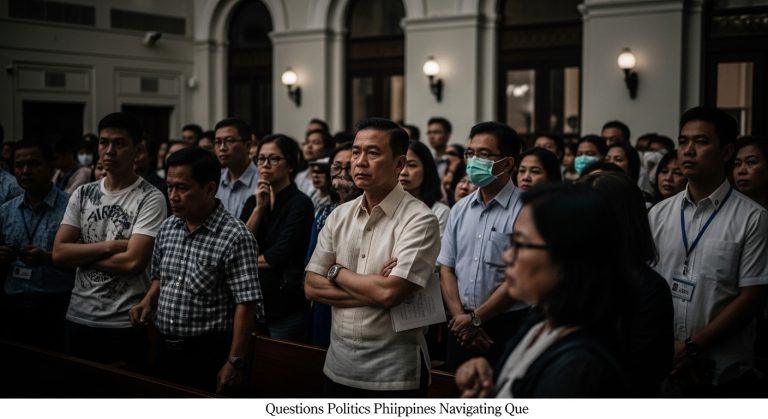

constitutional Politics Philippines is not a museum exhibit of past protest meters; it is a live test of how a nation translates popular will into durable governance. In the wake of global debates over reform and constitutional design, the Philippines sits at a juncture where legal structures, political incentives, and public trust interact in predictable but not predetermined ways. This analysis unpacks how reform conversations move from rhetoric to feasible policy, and why the path matters for long-term stability.
Historical Context: People Power and constitutional design
The 1987 Constitution aimed to prevent a repeat of authoritarian rule by dispersing power across institutions and safeguarding civil liberties. It created a balance among the presidency, Congress, the judiciary, and local government units, while preserving flexible mechanisms for reform through constitutional amendments. Over the decades, reform conversations have repeatedly surfaced in times of crisis or populist sentiment, only to stall when political alignments shifted or the costs of change grew too high. In this frame, debates about constitutional Politics Philippines are less about ideology and more about who bears the political risk of change, and who benefits from maintaining the status quo.
Institutional incentives and reform fatigue
Even when public demand for change is palpable, reform requires cross-cutting coalitions that can survive electoral cycles. In practice, the structure of the amendment process tends to privilege those with deep political reach: the presidency, the majority coalition in Congress, influential business groups, and regional power blocs. Each actor weighs the prospect of longer-term gains against immediate political costs. This dynamic creates reform fatigue, where proposals are watered down or postponed as the clock runs and rival factions recalibrate their incentives. Public impatience can grow when reforms seem to stall despite clear problems, feeding a perception that constitutional change is a distant, abstract project rather than a concrete governance tool.
Policy pathways: routes to reform, timing, and risk
There are several paths to constitutional reform, each with its own tempo and set of checks. A constitutional convention, legislative-initiated amendments, or a constitutional initiative via a plebiscite all carry different political and legal costs. In the Philippines, the preferred route often requires supermajorities, negotiations across parties, and sometimes a public vote, making a fast makeover unlikely. A careful approach would sequence amendments that address verifiable governance gaps—such as transparency provisions, electoral safeguards, or the clarity of term limits—while preserving the core safeguards that reassure diverse stakeholders. Timing matters: reforms tied to practical governance improvements are more likely to gain public support if they demonstrate measurable benefits within electoral cycles.
Implications for governance and public trust
When designed with inclusivity and clarity, constitutional reforms can strengthen institutions, reduce ambiguity in power-sharing, and improve accountability. Conversely, rushed or opaque processes risk eroding trust, inviting legal disputes, or triggering political backlash that undermines even well-intentioned goals. A scenario-based view suggests three potential futures: a collaborative, incremental reform path that stabilizes governance; a protracted deadlock that leaves gaps unaddressed; or a disruptive shift driven by a dramatic political realignment that unsettles existing institutions. In any case, the central test is whether reforms translate into predictable rules, fair enforcement, and tangible improvements in public service.
Actionable Takeaways
- Anchor reform efforts in inclusive, cross-partisan processes to build broad public legitimacy.
- Prioritize concrete, measurable governance improvements that can be tracked across electoral cycles.
- Map incentives for each major actor and design reforms that align long-term gains with short-term accountability.
- Communicate a clear reform timeline and the expected impacts to reduce uncertainty and misinformation.
- Prepare contingency governance plans to ensure continuity during transitional periods.
Source Context
From an editorial perspective, separate confirmed facts from early speculation and revisit assumptions as new verified information appears.
Track official statements, compare independent outlets, and focus on what is confirmed versus what remains under investigation.
For practical decisions, evaluate near-term risk, likely scenarios, and timing before reacting to fast-moving headlines.
Use source quality checks: publication reputation, named attribution, publication time, and consistency across multiple reports.
Cross-check key numbers, proper names, and dates before drawing conclusions; early reporting can shift as agencies, teams, or companies release fuller context.